 11
11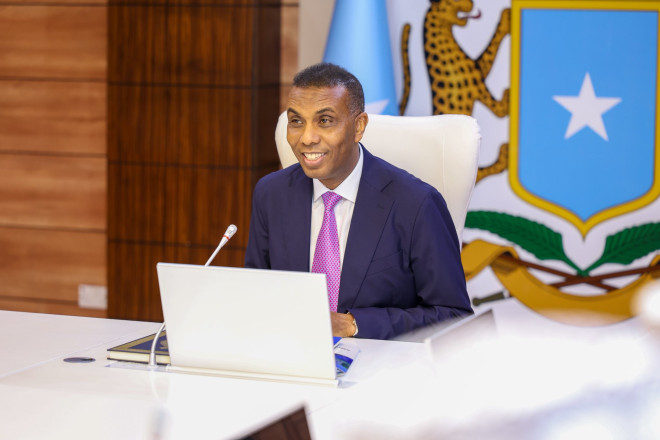

Mogadishu WBN Somalia’s government says it plans to recruit 12,000 teachers by the end of 2026 as part of efforts to rebuild a national education system weakened by decades of conflict and underinvestment.
Prime Minister Hamza Abdi Barre announced that 6,000 trained teachers have already been recruited and deployed over the past two years.
When his administration took office, roughly 900 teachers were on the federal government payroll.
“In just two years, we have recruited and deployed 6,000 trained teachers across the country,” Mr Barre said in a post on X. “We are pressing forward to reach 12,000 government-employed teachers by 2026.”
Somalia’s education sector was severely disrupted following the collapse of the central government in 1991.
For years, schooling in many areas relied heavily on private providers, community initiatives and international donors.
According to government figures, fewer than one in four Somali children were attending school when the current administration assumed office.
Officials now say enrollment has expanded significantly.
The number of candidates sitting the national Grade 12 examinations has risen from around 7,000 to 39,000, the prime minister said. In Las’anood, students reportedly sat national exams for the first time in nearly three decades.
Government data also indicates that nearly 250,000 students have graduated from higher education institutions, with approximately 200,000 currently enrolled nationwide.
Mr Barre described the recruitment drive as a symbol of national self-reliance, noting that teacher salaries are now fully financed through domestic revenue — a development he called historic.
“That is not just policy, it is pride.
It is sovereignty in action,” he said, adding that teachers are being recognised as central to the country’s future.
The move aligns with broader fiscal reforms aimed at strengthening state institutions and reducing dependence on external funding.
Despite the reported progress, significant challenges remain.
Officials estimate Somalia will ultimately need around 120,000 teachers to meet nationwide demand.
Education specialists say that expanding the teaching workforce is only one part of long-term reform.
Sustainable improvements, they argue, will depend on continued investment in school infrastructure, updated curricula, teacher training and effective governance systems.
For a country seeking to rebuild after decades of instability, the success of the education sector may prove central to broader state-building efforts.